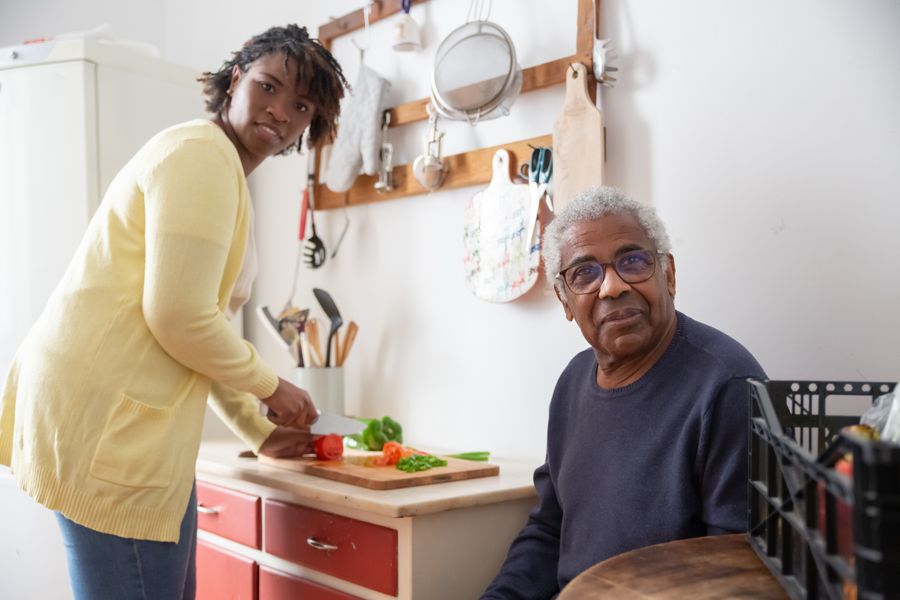
How we help day to day
- Keeping a steady routine for meals, washing, rest and activity
- Using the same caregivers wherever we can, so faces stay familiar
- Gentle prompts for dressing, eating and drinking
- Activities based on the person's own past, such as gardening, music, cooking or prayer
- Noticing changes in mood, appetite or sleep and letting the family know
- Reducing wandering and fall risks in the home
Late afternoons and evenings
Many people with dementia become more restless or confused later in the day. If that's when things get hard in your home, we can schedule care for those hours so nobody is managing it alone.
Support for the family
Caring for someone with dementia is tiring in a way that's hard to explain. Respite care gives you time to sleep, work or see your own friends. Family Caregivers of BC and the Alzheimer Society of B.C. also offer free information and support.
Planning ahead
As dementia progresses, care needs grow. We'll be straightforward with you when more hours or a different setting may be safer, and we can work alongside Fraser Health services.
We provide non-medical home support. We don't provide nursing care, wound care, injections or medication administration. If you need those, your doctor or Fraser Health Home and Community Care can arrange them, and we can work alongside that care.
Common questions
My mother refuses help. What can we do?
This is very common. We usually start small, often as a friendly visitor who helps with a meal or an outing. Trust tends to build from there, and personal care can come later.
Can you care for someone with dementia overnight?
Yes, overnight and live-in care are available. We'll talk through night-time needs such as wandering or toileting before setting a schedule.
Do you help people with Parkinson's too?
Yes. We offer non-medical support for people with Parkinson's, including mobility help, meal support and personal care.