What's included
- Bathing, showering and hair care
- Dressing, grooming, shaving and oral care
- Toileting and continence support
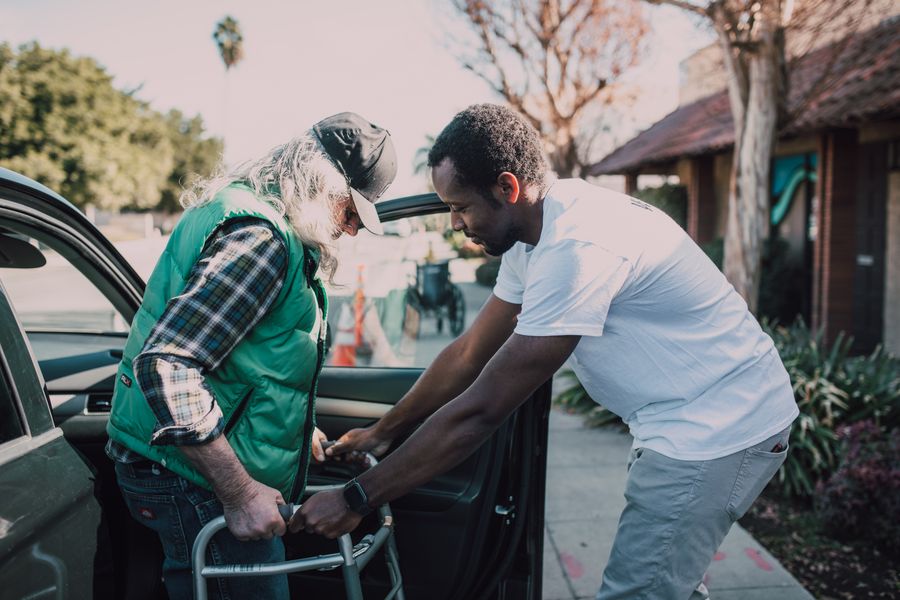
- Help getting in and out of bed, chairs and vehicles
- Walking support and fall-prevention habits around the home
- Meal preparation and help with eating
- Medication reminders
Keeping it comfortable
Accepting help with a shower can be hard, especially from a stranger. We talk with your parent about how they like things done, what they'd rather do themselves and whether they're more comfortable with a male or female caregiver. Then we build the routine around their preferences.
When to think about personal care
Common signs include skipped showers, wearing the same clothes for days, a recent fall, weight loss or a spouse who is wearing out from lifting. If you've noticed any of these, an early conversation is usually easier than one after a hospital stay.
Care after an injury
If you need personal care because of a crash or work injury, your claim may help cover it. See our pages on ICBC personal care assistance and WorkSafeBC home support.
We provide non-medical home support. We don't provide nursing care, wound care, injections or medication administration. If you need those, your doctor or Fraser Health Home and Community Care can arrange them, and we can work alongside that care.
Common questions
Can I request a female or male caregiver?
Yes. Tell us your preference at the consultation and we'll do our best to match it. Let us know about language or cultural preferences too.
Do your caregivers give medication?
No. We offer reminders, but we don't administer medication because we provide non-medical care. A pharmacist can often help with blister packs that make reminders simpler.
Can you help someone who needs a mechanical lift?
Tell us about the equipment and the person's needs. We'll review it during the home visit and let you know honestly whether we're the right fit.